Why My Books Are Nonfiction
Writing From Real Experience
I write nonfiction because my work is grounded in facts, lived experience, research, public records, law, policy, and events that have affected real people.
I have never been interested in inventing stories simply to entertain. My purpose in writing is different. I write to document, explain, question, preserve, and share what I have learned through decades of professional and personal experience.
Writing From Real Experience
Many of my books were inspired by matters I personally witnessed or experienced, including:
- immigration and citizenship;
- government policy and regulation;
- law and access to justice;
- professional accountability;
- business and financial hardship;
- family and community life;
- retirement and aging;
- technology and artificial intelligence;
- social change; and
- the future of humanity.
These subjects are not imaginary to me. They are connected to real decisions, real institutions, and real consequences.
Facts Matter to Me
I am a factual person. When I write about an issue, I want readers to understand:
- what happened;
- why it happened;
- who was affected;
- what the available records show;
- what lessons can be learned; and
- what changes may be needed.
My books may include my opinions, reflections, and interpretation of events, but those views are developed from experience, observation, documents, and research rather than fictional characters or invented events.
Writing to Inform and Encourage Discussion
My goal is not merely to describe problems. I also want to encourage discussion about possible solutions.
Nonfiction allows me to explore difficult questions directly:
- How should governments serve the public?
- How can professional institutions be more accountable?
- How should people protect their legal rights?
- What can society learn from individual experiences?
- How can technology improve human life?
- What kind of world are we leaving to future generations?
I do not expect every reader to agree with all my conclusions. I hope, however, that my books encourage readers to think, investigate, and participate in meaningful discussions.
Personal Experience and Public Issues
Some of my writing combines personal experience with broader public issues. A private experience can reveal weaknesses in a system that may affect many other people.
For that reason, my books often move between:
- personal history;
- documentary evidence;
- legal and policy analysis;
- social commentary; and
- proposals for reform.
This approach allows me to explain not only what happened to one person, but also why the experience may matter to the public.
My Responsibility as an Author
When writing nonfiction, I recognize the importance of accuracy and fairness.
I make every reasonable effort to distinguish among:
- documented facts;
- personal recollections;
- opinions;
- allegations;
- disputed matters; and
- findings made by courts, tribunals, governments, or other official bodies.
Where appropriate, readers are encouraged to consult the original documents, legislation, court records, and public sources.
Why I Continue to Write
I write because experience has value when it is shared.
A person’s work, challenges, mistakes, achievements, and observations can help others understand an issue more clearly. Writing transforms those experiences into something that can remain available long after a conversation has ended.
My nonfiction books are therefore more than personal stories. They are my contribution to public knowledge, historical memory, and future discussion.
I write nonfiction because truth, experience, and documented history deserve to be preserved.
Writing to Preserve a Record
Important experiences are often forgotten, misunderstood, or never properly recorded. Writing allows me to preserve information that might otherwise disappear.Some of my books document events that affected my work, my family, my community, or the public. Others examine broader questions about justice, government, technology, peace, freedom, and human dignity.By putting these experiences into books, I create a permanent record that readers can consider for themselves.

Voice Canada Publishing is an independent platform
Publishing ideas that examine systems, perception, and under
Voice Canada Publishing is an independent platform dedicated to analytical work. It focuses on how information is communicated, how narratives are formed, and how meaning is interpreted.
The Broken System

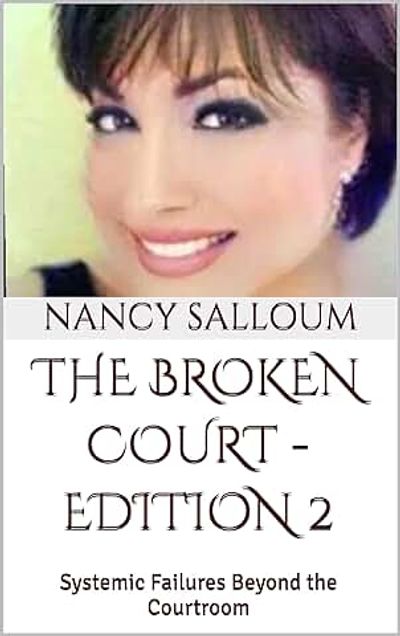
The Broken Court — Second Edition
The Broken Court — Second Edition
- THE BROKEN COURT - EDITION 2: Systemic Failures Beyond the Courtroom
Canada’s justice system does not operate in isolation. What happens inside a courtroom is shaped by forces far beyond the bench—professional regulation, economic incentives, political influence, institutional culture, and structural imbalance.
- The Broken Court — Second Edition is a continuation of a larger call for accountability, transparency, and modernization within Canada’s justice system.
- This is not a legal manual. It is an examination of how justice functions as a system—and how that system must change to serve the public it exists to protect.
The Broken Court — Second Edition expands the examination of Canada’s justice system by moving beyond courtroom procedure to reveal the deeper systemic failures that influence legal outcomes long before a case is heard.
This edition explores how self-regulation within the legal profession affects accountability, how economic structures place justice beyond the reach of ordinary citizens, and how power dynamics—within law societies, government, education, and expert systems—shape access, fairness, and public trust.
Through careful analysis and comparative insight, this book examines:
· how self-regulating legal institutions affect public confidence
· why access to justice remains largely theoretical despite decades of reports
· how litigation economics reward complexity over fairness
· the role of experts, professional networks, and procedural tactics
· systemic barriers faced by self-represented litigants and immigrants
· why meaningful reform has stalled despite clear evidence of need
Rather than focusing on individual cases, this edition addresses the structures that allow inequity to persist. It offers readers a clear understanding of why incremental reform has failed—and why structural redesign is essential.
Written for policymakers, legal professionals, academics, and informed citizens,